
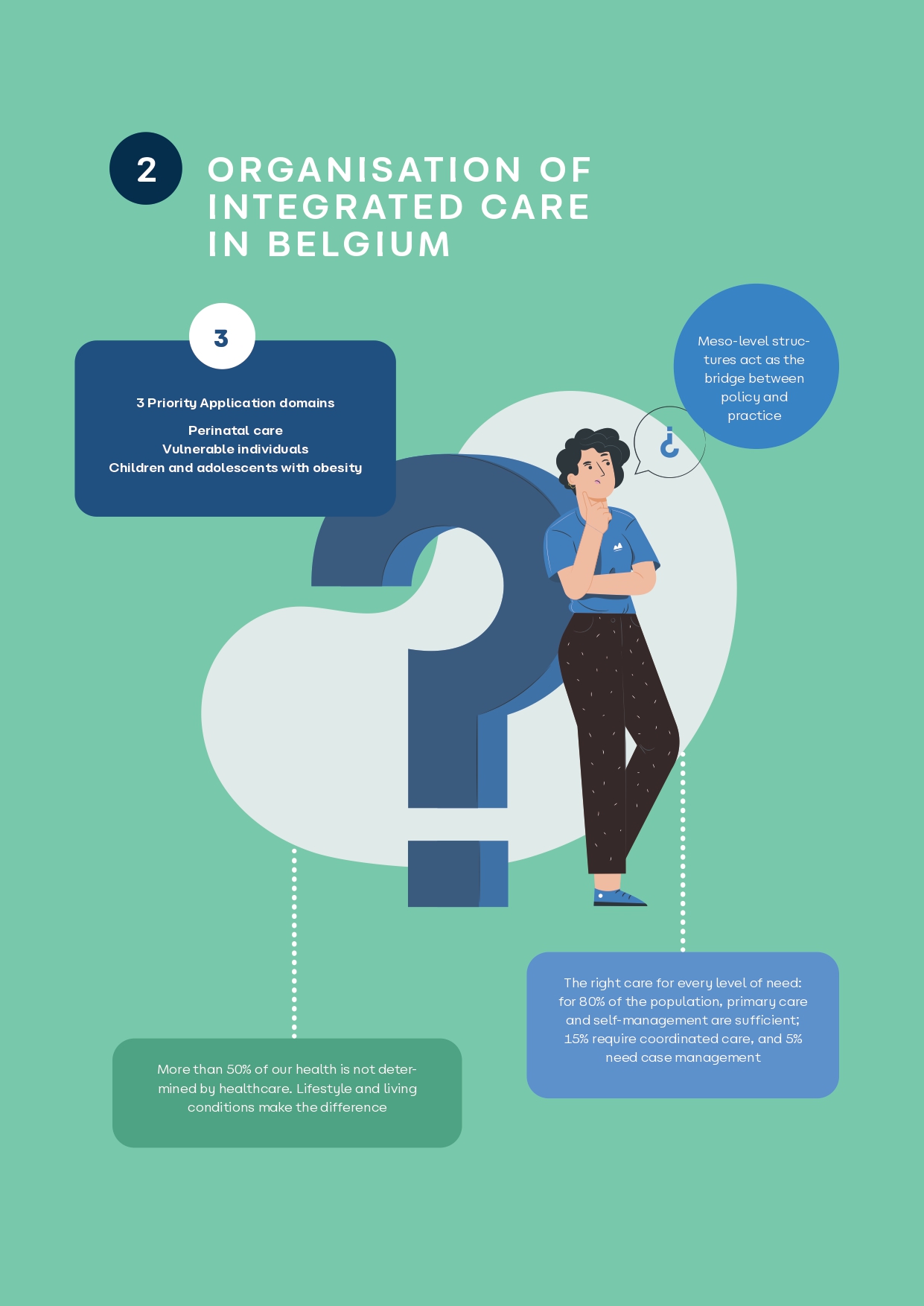
2.1 The evolution of integrated care in Belgium
In Belgium, we have already been working for years to develop a healthcare system which, amongst other things, enables healthcare and social service providers to work together more effectively. In recent years, this trend has been further reinforced by new plans and projects, both at federal level and within the federal regions. This initiative aims to address the historical fragmentation of care, the shortage of healthcare and social service providers and the increasing complexity of care needs, and is in line with international recommendations regarding the continuity of care and person-centred care.
The timeline below provides an overview of how federal initiatives relating to integrated care have evolved in recent years.
Evolution of policy initiatives at federal level in the context of the development of integrated care
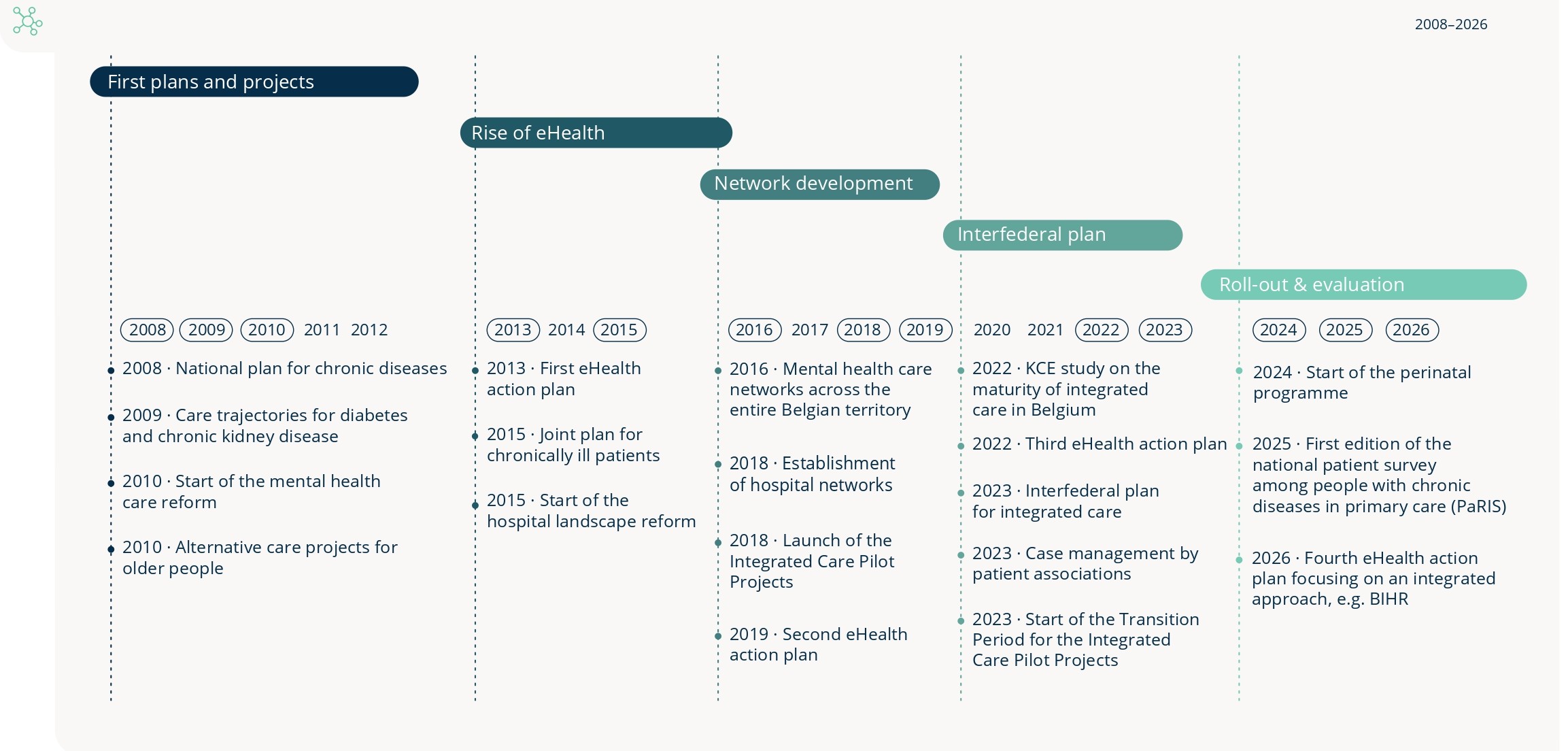
The timeline shows, amongst other things:
- The emergence of various care pathways that require collaboration with different disciplines to develop a single care plan for the individual (e.g. care pathways for diabetes and renal insufficiency and projects focusing on alternative forms of care for older adults).
- The evolving healthcare landscape with an increasing role for supporting mesostructures – such as mental healthcare networks or hospital networks on a regional level – to facilitate collaboration and integrated care in the field.
- Ongoing digital developments in healthcare arising from the various action plans for eHealth. This should ultimately result in a single, unified electronic patient record, known as the Belgian Integrated Health Record (BIHR).
The Federal Knowledge Centre for Health Care (KCE) emphasises the fact that the transition to more integrated care is a necessity. In a report from 2022 [1] the KCE explains that our healthcare system is still too focused on acute care and ‘payment per service’. In the current context, this approach no longer works well when it comes to issues such as an ageing population, chronic diseases and people with multiple conditions. That is why the KCE is proposing three things:
1. A clear policy framework for integrated care
2. A delineation of healthcare regions in Belgium
3. A reform of the funding system
For more information, please visit https://www.kce.fgov.be/en/kce-press-release-kce-reports-359-towards-integrated-care-in-belgiumstakeholders-view-on-maturity
On 8 November 2023, a major step was taken towards this goal: the Interfederal Plan for Integrated Care was launched and signed by all of Belgium’s ministers of health. This plan is helping to organise and coordinate care and support more effectively. It views the individual or patient as a full partner in the care and support process, encourages collaboration between disciplines by means of joint care planning, for example, and seeks to break down barriers between healthcare, well-being and social services.
Eight agreements have been reached between the various government agencies in this plan:
| 01 |
The Interfederal Plan for Integrated Care provides a shared framework for initiatives by the various levels of government to work together on the Quintuple Aim objectives (see below) and on integrated care. |
| 02 | The Interfederal Plan for Integrated Care provides a shared framework for initiatives by the various levels of government to work together on the Quintuple Aim objectives (see below) and on integrated care. |
| 03 |
Policy initiatives are based as much as possible on person-centred and goal-oriented care, using a broad and interdisciplinary approach that brings together care and well-being. |
| 04 | The federal regions and the federal government align their interpretations of key concepts in integrated care with the definitions set forth in the Interfederal Plan for Integrated Care. Where necessary, this can be done in an asymmetrical manner, taking into account the unique characteristics of each federal region. |
| 05 | Working closely with citizens and adopting a population-based approach are key features of this approach. Both horizontal and vertical collaboration across sectors is essential in this regard. This requires a strong and responsive meso level that supports the micro level and operates within the policy frameworks on the macro level. |
| 06 | In collaboration with the federal government, each federal region is examining how best practices from ongoing federal initiatives can be sustainably embedded at meso level, and how these can be further rolled out and funded under Agreement 8. |
| 07 | The federal regions and the federal government are committed to data-driven health and welfare policies that support collaboration, communication and data sharing. The alignment between the Interfederal Plan for Integrated Care and the Action Plan e-Health is monitored within the Inter-Administrative Platform and translated into concrete actions. |
| 08 | The federal government and the federal regions will ensure that resources that strengthen integrated care are allocated efficiently and in a coordinated way. This is achieved by adopting a coordinated approach and by means of funding mechanisms that promote integrated care, to which each level of government contributes within its own areas of jurisdiction. |

For more information about the Interfederal Plan, please visit https://www.riziv.fgov.be/nl/professionals/info-voor-allen/het-interfederaal-plan-voor-geintegreerde-zorg
The Interfederal Plan currently serves as the shared framework for the continued development of integrated care between the various authorities responsible for healthcare in Belgium. It builds on previous experience and initially focuses on three Application domains, namely:
- Perinatal care
- Vulnerable individuals
- Children and adolescents with obesity
The perinatal programme, which focuses on early detection and an interdisciplinary approach regarding pregnant women with psychosocial vulnerabilities, is currently being rolled out throughout Belgium. The first 1,000 days are crucial for a child’s physical, mental and social development. Investing in that period is essential in order to provide every child with equal opportunities from the very beginning. Reports from the KCE show that prenatal and postnatal care and support in Belgium are not always timely, accessible or tailored to the needs of (expectant) mothers, particularly for women in psychosocially vulnerable situations.
For more information, please visit https://kce.fgov.be/en/publications/thematic-pages/focus-on-pregnancy-and-birth
The other two programmes are still under development. By implementing integrated care programmes, we aim to link care and well-being together more effectively for specific target groups and to achieve greater continuity of care within the care and support process.
Overall, Belgium is working towards a healthcare model that is simpler, more coordinated and better organised. A model that encourages collaboration is based on what people truly need and is sustainable for the future.
2.2 How to achieve integrated care : the Rainbow Model
Integrated care can be organised according to Pim Valentijn’s Rainbow Model. That model shows that integrated care consists of various layers that interact with one another. It helps healthcare and social service providers, organisations and policymakers to collaborate more effectively and organise care in a logical manner. The model recognises that healthcare is complex and that multi-level collaboration is necessary in order to achieve the best outcomes for patients.
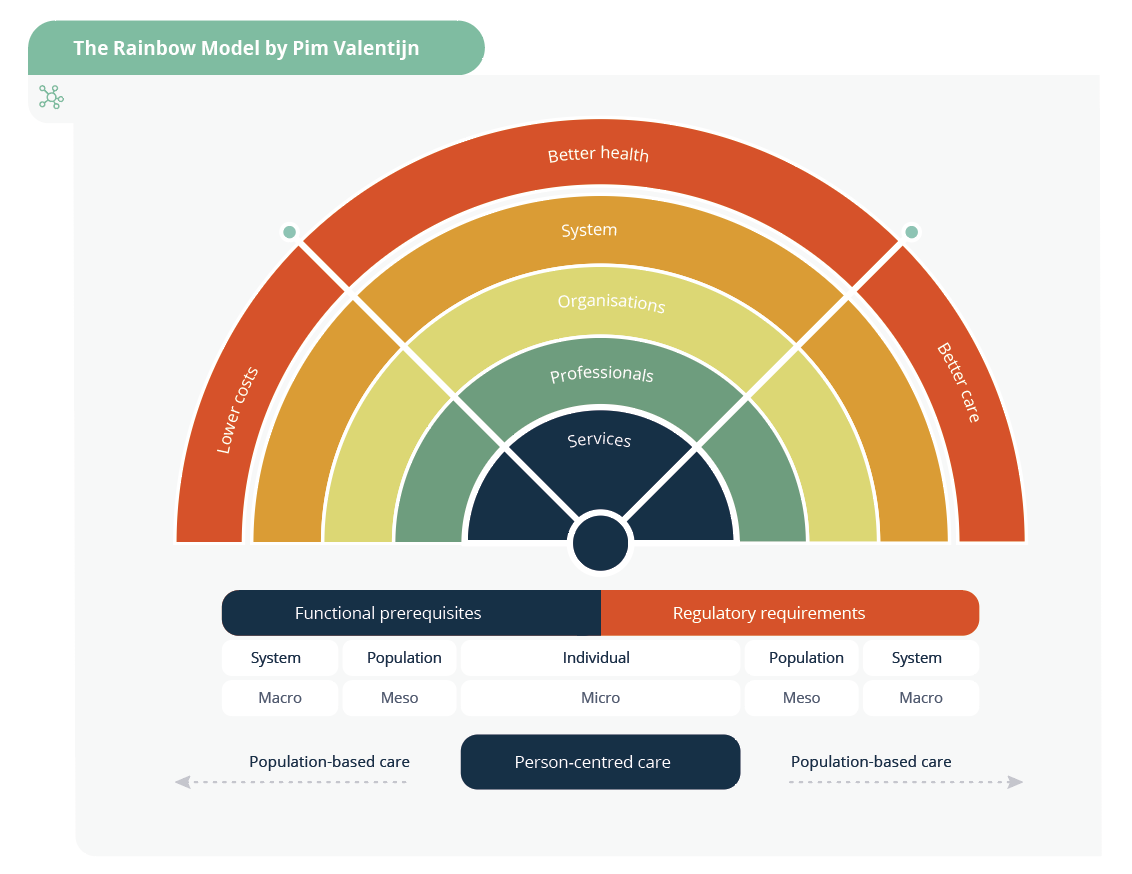
For more information about the Rainbow Model, please visit https://www.essenburgh.com/en/lp-care-innovation-the-rainbow-model-for-integrated-care/
The various layers of the model are explained in more detail in this chapter.
However, the principles of integrated care only truly come to life when applied to a specific situation. A case study illustrates how integrated care is put into practice and how the different levels of the rainbow model – the system, organisation and care delivery – work together to provide person-centred and goal-oriented care.
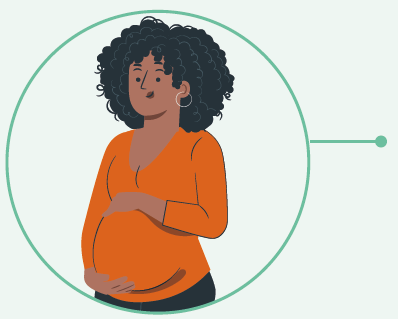 |
Nathalie (26) lives with her partner, Johan (28). The couple has two young children: Luna (1.5 years old) and Timo (4 years old). Timo has autism and is participating in an outpatient rehabilitation programme for that condition. Nathalie is pregnant with their third child. Nathalie works at the local supermarket under a 4/5 contract. Johan is unemployed and is receiving unemployment benefits. Finding a job is proving difficult. They live in a rented, private two-bedroomed apartment. The family is experiencing financial difficulties. The couple is two months in arrears on their rent. They can’t make ends meet, but they also like buying ‘must-haves’ and brand-name clothing online on a regular basis. Their financial problems are causing stress within the family. Nathalie and Johan have frequent heated arguments. Because of these worries (and with the arrival of a third child), Nathalie is feeling mentally unstable. Nathalie has a general practitioner, but she hardly ever sees him. She realises that she isn’t feeling well mentally, but she doesn’t dare go to a psychologist and doesn’t know how to go about that either. She’s also afraid of her husband’s reaction. The only healthcare provider she currently sees on a regular basis is her gynaecologist, who usually doesn’t have much time for a genuine chat and always sees both parents together. |
2.2.1 Objectives of integrated care (external)
The Rainbow Model starts from the outer side, based on the goals we are pursuing with integrated care, namely:
- better public health in Belgium
- improved quality of care experience for citizens
- more efficient use of the available resources
Over the years, two additional key objectives of integrated care have been identified, namely
- more well-being amongst professionals working in the health and welfare sector
- more equitable access to healthcare
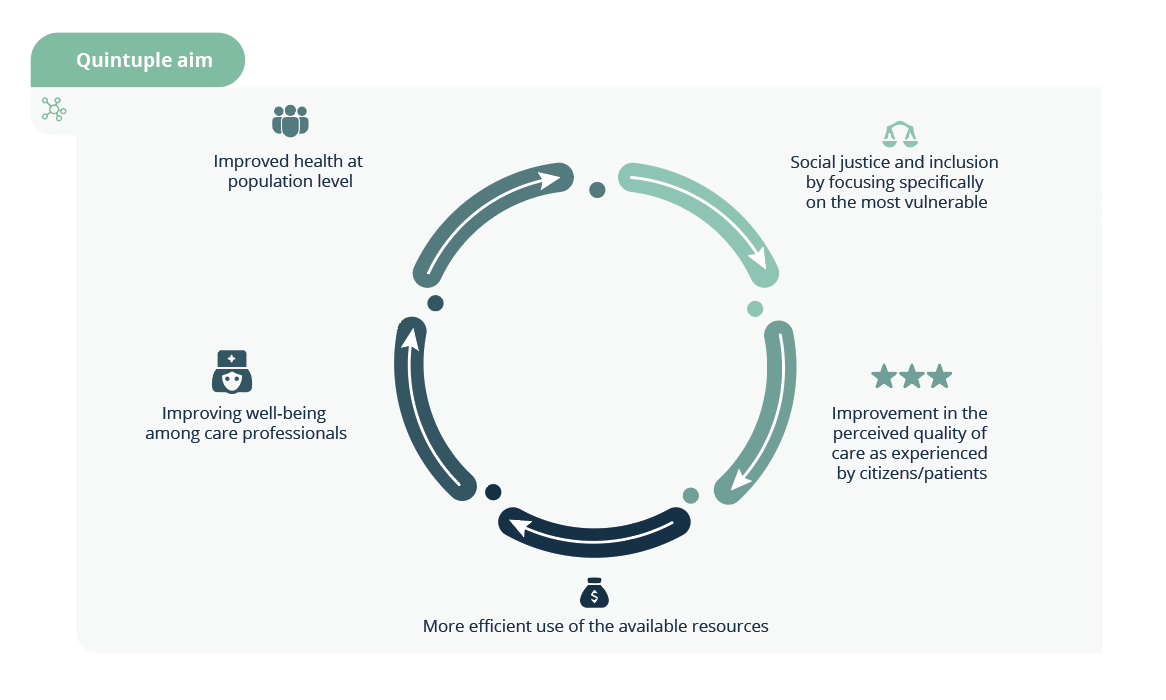
In 2025, the Institute for Healthcare Improvement expanded its goals to include a sixth objective: a focus on sustainability and the environment within the healthcare sector.[2]
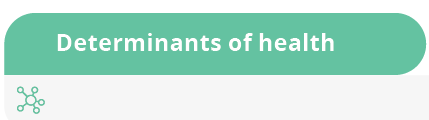
It is important to consider all factors that influence health, such as a person’s social context or living conditions. Research shows that healthcare accounts for only 11% of health outcomes. Health behaviours (e.g. smoking, dietary habits, alcohol consumption or physical activity) and social and physical living conditions (such as income, education, living environment and social network) together account for more than 50%.8 By actively involving people in their own care and moving away from working in separate ‘silos’ both within and outside the healthcare sector, we can achieve much greater health benefits. This core principle also forms part of the basis for the Interfederal Plan for Integrated Care.
 |
2.2.2 Integration on different levels (underlying layers)
The underlying layers of the Rainbow Model illustrate the various levels at which care needs to be integrated in order to achieve high-quality and coordinated care. Each layer is explained below, from the outside in.
2.2.2.1. System integration
Integrated care begins with system integration. For high-quality integrated care, it is important that the system itself is coordinated. That means: clear rules, well-thought-out policies and funding that meets the needs of the population. This will ensure that healthcare organisations and healthcare providers are able to work towards the same goals.
| System integration is carried out by the ‘macro level’. This is the level of the various authorities responsible for healthcare and welfare policy. They establish the legislation and the funding and provide support in relation to aspects such as methodological guidelines or digital support for integrated care on the ground. Thanks to strong support at this level, the lower levels can work together in a consistent and high-quality manner. |
In Belgium, the macro level for the coordination of integrated healthcare policy is represented by the administrative bodies of the following authorities:
- Federal government: Federal Public Service Health and the National Institute for Health and Disability Insurance (NIHDI)
- Flemish Community: Department of Care
- Walloon Region: Agence pour une Vie de Qualité (AVIQ)
- Brussels-Capital Region: Vivalis, Iriscare and the French Community Commission (COCOF)
- German-Speaking Community: Ministry of the German-Speaking Community
- French Community: Office for Birth and Childhood (ONE)
Depending on the subject matter, additional administrative bodies may be involved.
|
How is system integration achieved in the case of Nathalie and her family? Via the perinatal programme. This is an interfederal programme that establishes a common policy framework for healthcare and social service providers, enabling them to collaborate on behalf of a single family (such as Nathalie’s), regardless of jurisdictional levels. The programme encourages healthcare and social service providers to work together with the aim of providing continuous and integrated care that is tailored to the needs of pregnant women with psychosocial vulnerabilities and their families. |
2.2.2.2 Organisational and professional integration
Below the system level is the level of the organisations and of healthcare and social service providers.
- Organisational integration means that the operations of health and social services organisations (e.g. hospitals, home care agencies, public centres for social welfare, etc.) are more effectively coordinated. This can range from agreements on referrals to joint projects or long-term collaboration focused on specific themes, target groups, or processes.
- Professional integration involves coordination and collaboration between individual healthcare and social service providers, by means of consultation, the distribution of roles, or other forms of collaboration across different patients, for example.
| Organisational and professional integration are driven and supported by the meso level. This is the intermediate level between individuals (professionals, citizens) at the micro level and policy makers or the system at the macro level. The meso level organises integrated care on a locoregional level. It brings together organisations, facilities, networks, health insurance funds, local governments, healthcare and social service providers, patient associations, informal caregivers and volunteers. At this level, agreements are made to improve collaboration between healthcare and social service providers. It often consists of an interdisciplinary umbrella organisation that represents various organisations or professionals in the field. |  |
In the Interfederal Plan for Integrated Care, this meso level was assigned five key tasks:
| 01 | Population management: to help tailor healthcare and support services in a region to the needs of the local population. Based on data and insights, initiatives are launched to improve health and predict future needs. |
| 02 | Promoting integration: to bring healthcare and social service providers together, to support networking, to facilitate agreements between organisations and to promote interdisciplinary and trans-institutional collaboration. |
| 03 | Supporting change management: to help foster a culture of integrated care by sharing best practices, to organise peer review sessions, to inform healthcare and social service providers and to gather feedback. |
| 04 | Implementation support: to provide guidance on the implementation of specific initiatives, such as interfederal programmes relating to integrated care. |
| 05 | Evaluation and monitoring: to track the implementation of initiatives, to identify bottlenecks, to gather feedback from the field and to provide feedback to the micro and macro levels. |
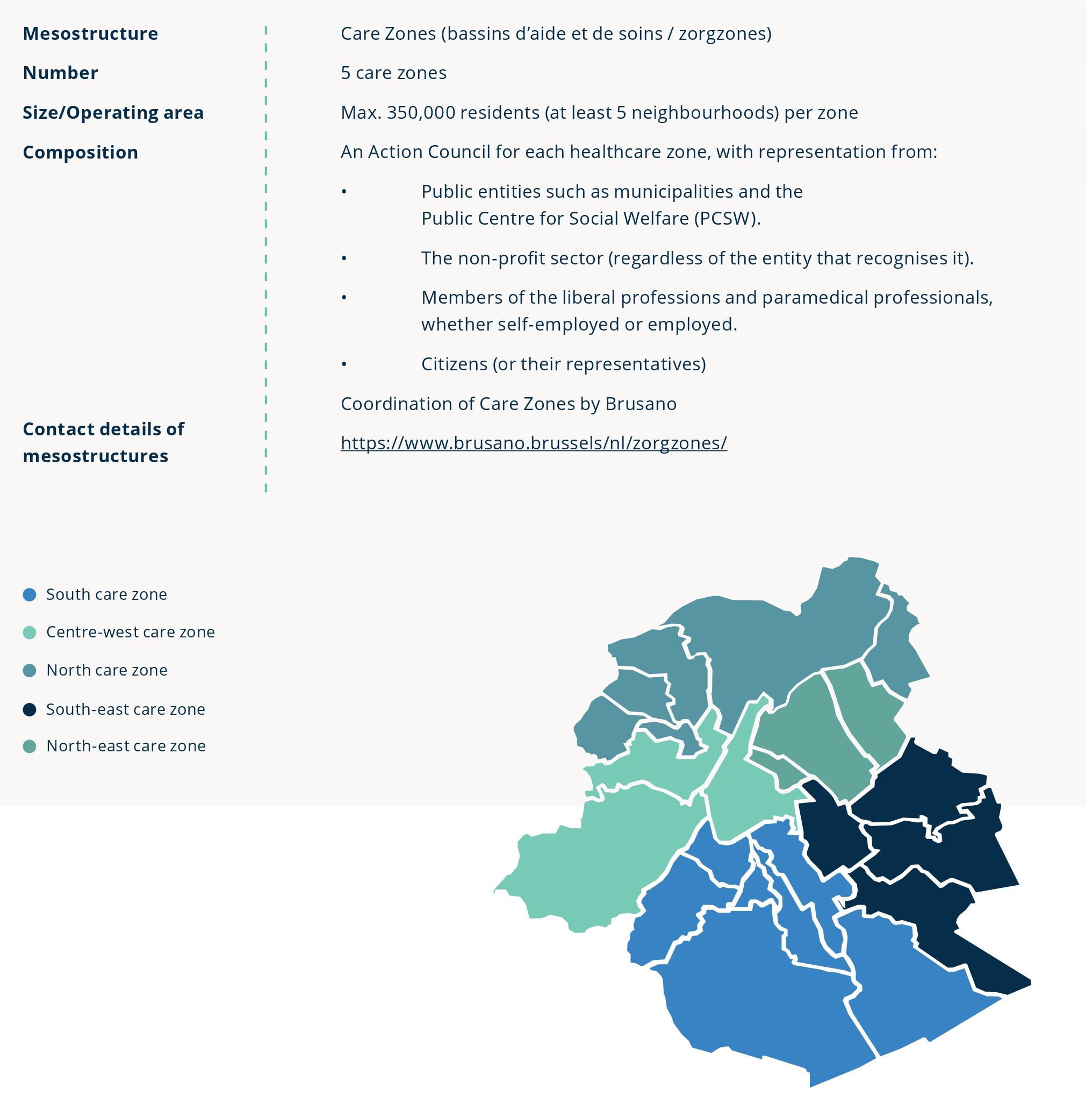
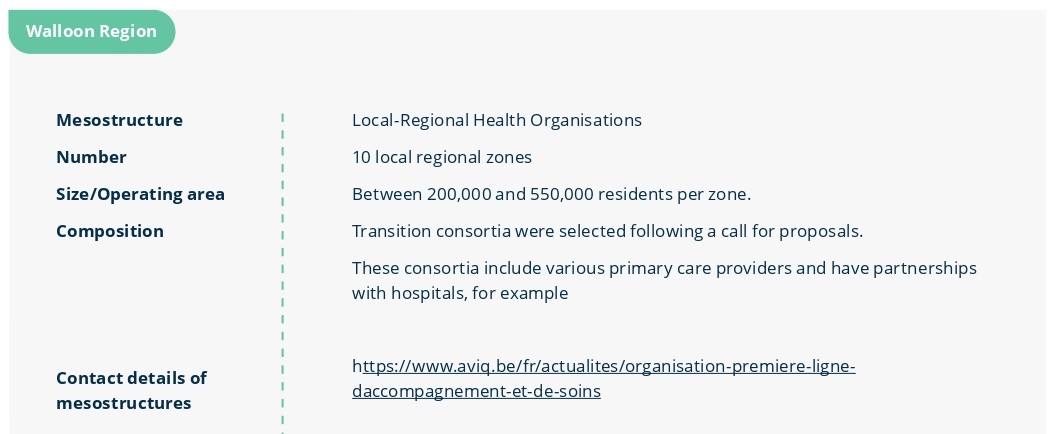
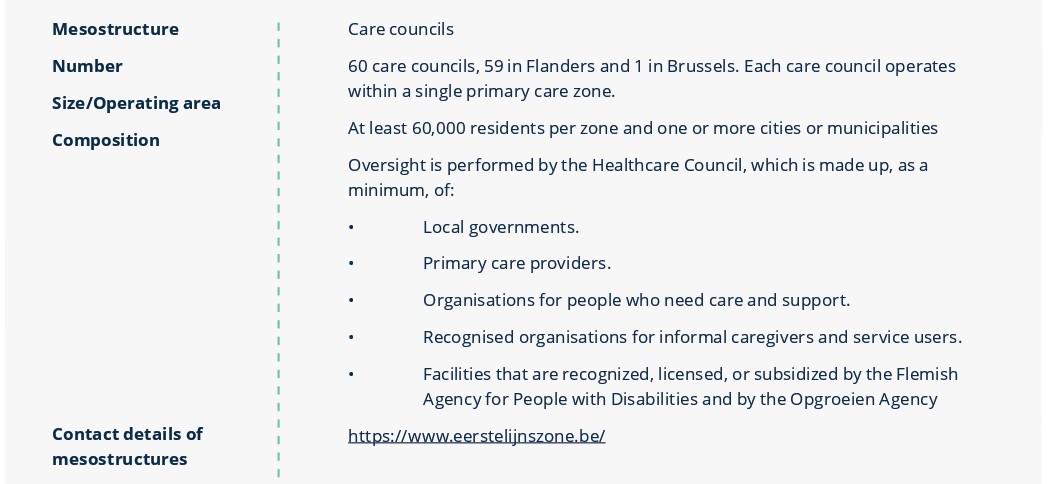
In each federal region, there is currently one meso-level organisation that plays a central role in supporting integrated care. The table below provides an overview of the meso-level organisations in each federal region that are relevant to the organisation, implementation and monitoring of integrated care.
- Brussels-Capital Region: Care zones
- Walloon Region: Local-Regional Health Organisations (OLS), which are still in the process of being established
- Flemish Community: Care Councils, active in the primary care zones. In addition, regional care zones were recently defined as a higher-level building block and a forum for strategic coordination.
- German-speaking Community: In the German-speaking Community, there are no separate mesostructures due to the scale of operations. There, the tasks are carried out by the ministry itself.
They are responsible for the efficient organisation of primary care in a defined region, in coordination with the local neighbourhoods and the region, to ensure that the range of care and support services provided effectively meets the needs of the population.
 [4]
 [5]
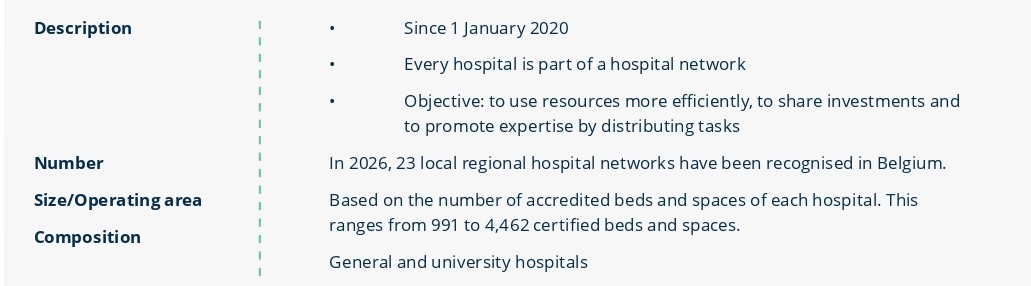
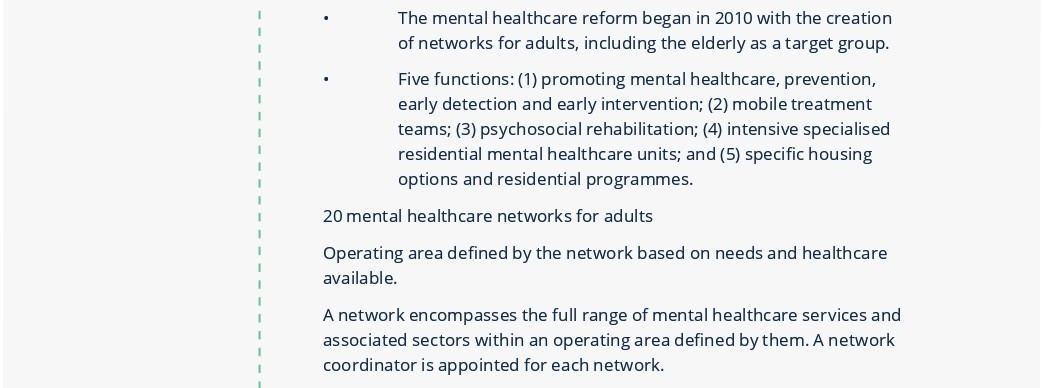
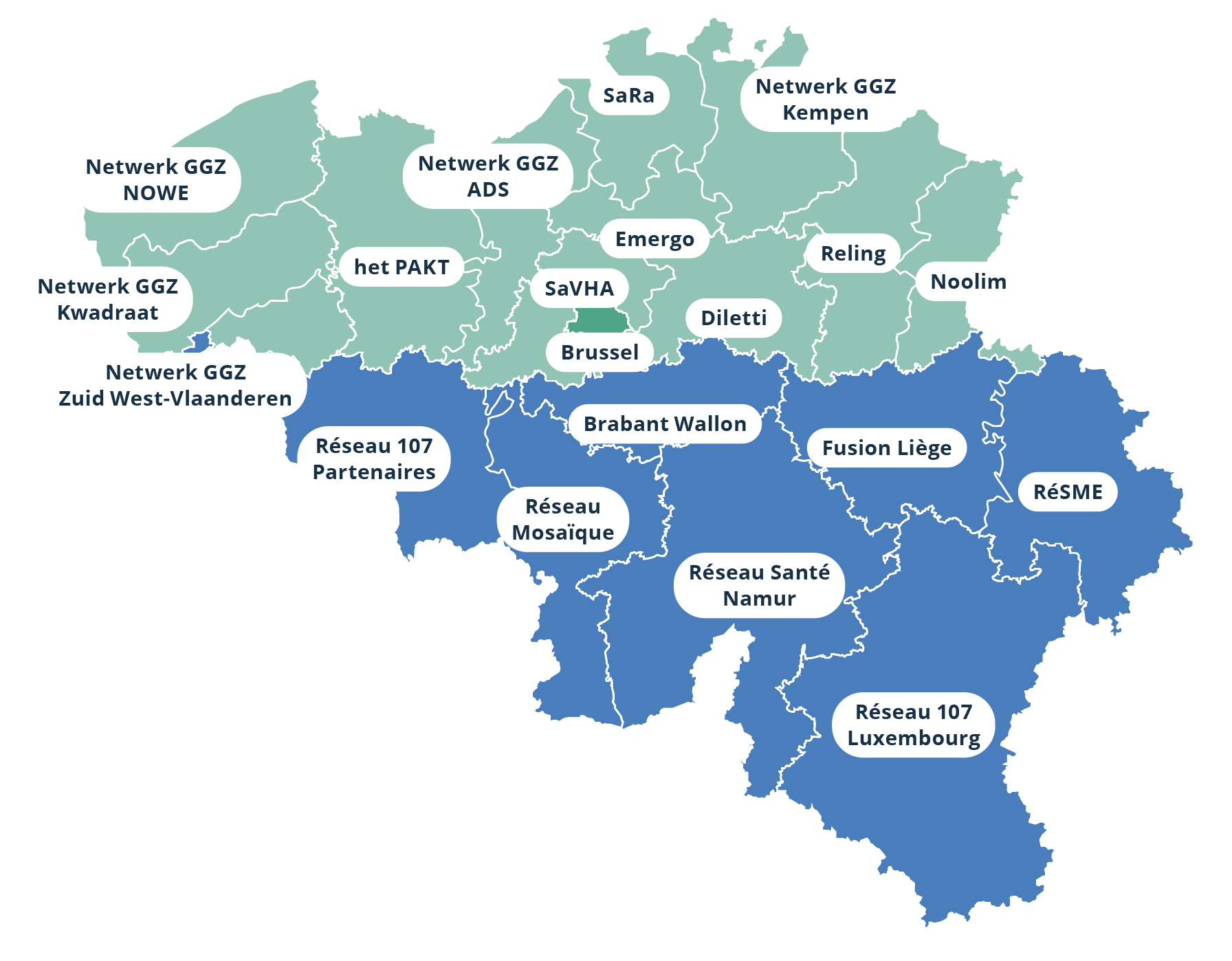
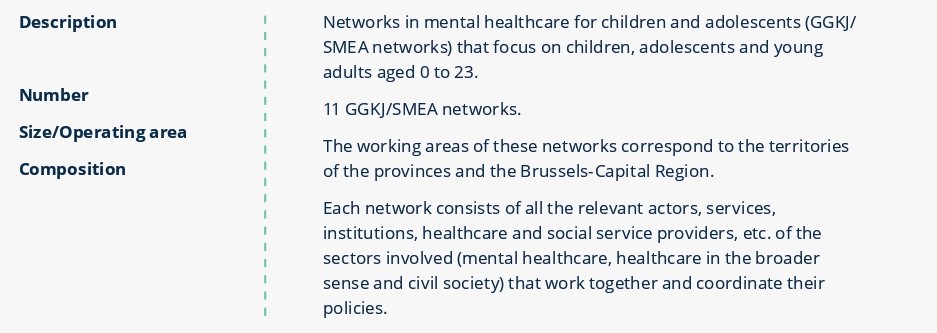
In addition, there are other mesostructures in Belgium that have been embedded within a sustainable policy framework. Below is a (non-exhaustive) overview of existing mesostructures fulfilling a task relating to integrated care.
 [6]
 [7]
 [8]
|
What role does the meso level play in the case of Nathalie and her family? To provide integrated care for Nathalie and her family, collaboration is needed between various healthcare and social service providers from both the healthcare and welfare sectors. The meso-level organisations referred to above – Brusano and the Care Zones, Local-Regional Health Organisations (OLS) and Primary Care Zones (ELZ) – play a supportive and coordinating role in this regard. To implement the perinatal programme, local meso-level organisations are setting up working groups with all relevant healthcare and social service providers to establish clear agreements on collaboration. These working groups are examining which healthcare and social service providers can take on which roles in supporting pregnant women and their families. In Nathalie’s case, the work being undertaken at meso level ensures that the healthcare and social service providers working with Nathalie already know each other, have built a relationship and can collaborate smoothly. The meso level uses available statistical data to assess the situation within its operating area. Amongst other things, this gives them an idea of how many women give birth each year in their region, at which hospitals these women give birth and which psychosocial vulnerabilities are most common. In addition, they gather a great deal of information from conversations with local healthcare and social service providers and with pregnant women themselves. Based on this information, the meso level can tailor care and support in their region to best meet the identified needs. |
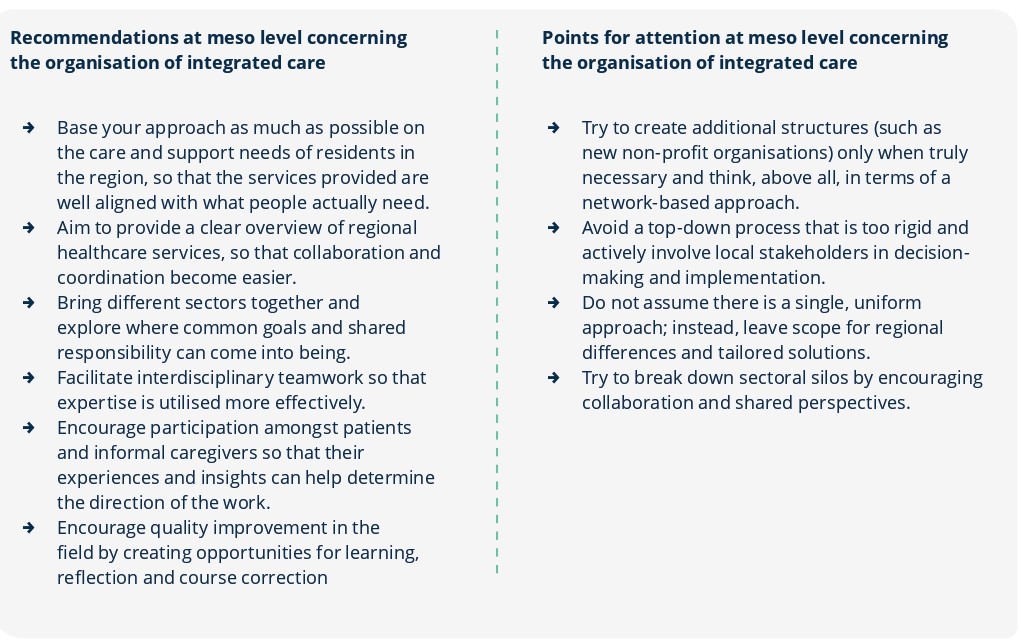
Finally, a number of tips are provided to professionals working at meso level to help them implement integrated care:
2.2.2.3 Clinical integration
At the lowest level of the rainbow is the integration of ‘services’, or the coordination of the actual care and support provided to a specific individual. Various interventions are coordinated with one another, by means of interdisciplinary guidelines, care pathways, or inter-federal programmes, for example.
|
The integration of services or of actual care and support is carried out at micro level. The micro level refers to the care and support that is organised directly for and in collaboration with individuals or local groups. This is the level at which the interdisciplinary team collaborates with the individual and his or her environment. Neighbourhood and community teams also operate at this level. The focus is always on the individual and on his or her own needs and goals. Healthcare and social service providers coordinate their support to ensure that their work is as integrated, person-centred and goal-oriented as possible. |

The basic principle is simple: not everyone needs the same amount or intensity of care and care works best when it is provided in a proportionate and targeted manner.
Kaiser Permanente, an American healthcare organisation, developed a model that shows how healthcare can be organised most effectively for a population, based on its healthcare needs.
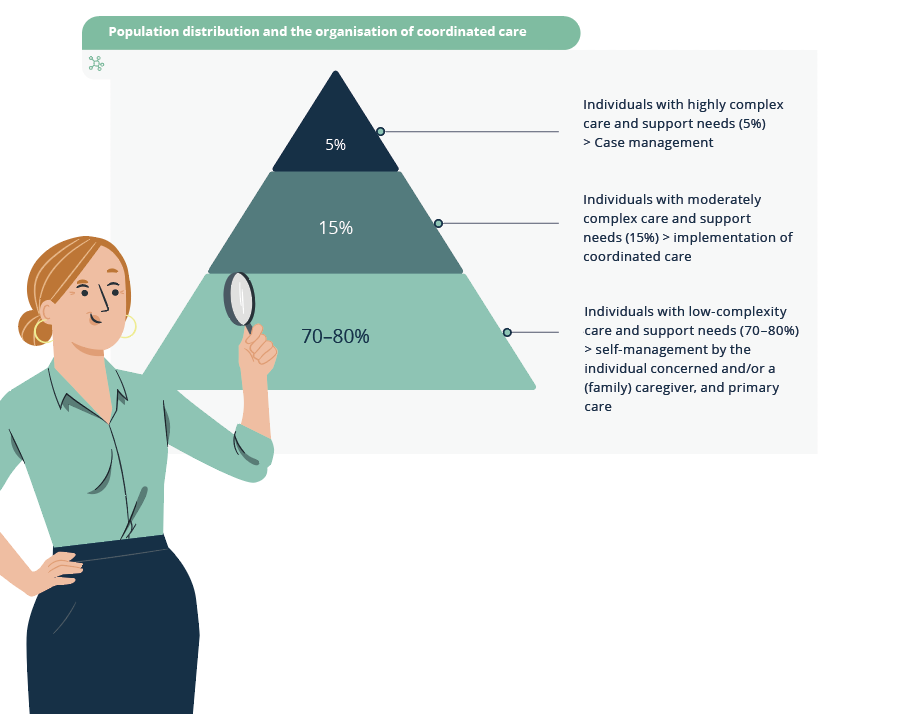
This pyramid is made up of three levels. The bottom layer of the pyramid contains the largest group of people: the healthy population and individuals with low-complexity care and support needs. These people generally require little care and have only occasional contact with primary care providers or social service providers. For this group, the focus should be on prevention, self-care and self-management, with the goal of preventing or managing problems so that more intensive care can be avoided. They coordinate their own care and support. It is important to focus as much as possible on health promotion and prevention so that people can remain in the bottom tier of the pyramid for as long as possible.
The middle tier includes people with greater care and support needs (e.g. individuals with multiple health problems, unstable chronic conditions, or a combination of medical, psychological and social needs). These individuals require regular guidance and are often supported by professionals from various disciplines. Within this group, it is important to avoid fragmentation and to ensure that healthcare and social service providers work together to address what matters most to the individual. The reason for this is to prevent the person’s situation from becoming complicated. A healthcare or social service provider will coordinate the healthcare and support.
At the top of the pyramid is a small but vulnerable group of people with highly complex needs. They require intensive, often specialist and interdisciplinary care. In these situations, it is especially important to create stability, improve quality of life and avoid unnecessary crises and escalations. The group of people at the top of the pyramid will potentially experience the greatest impact on their quality of life and accounts for a large portion of health insurance expenditures in Belgium. [9] This often requires intensive care coordination or case management.

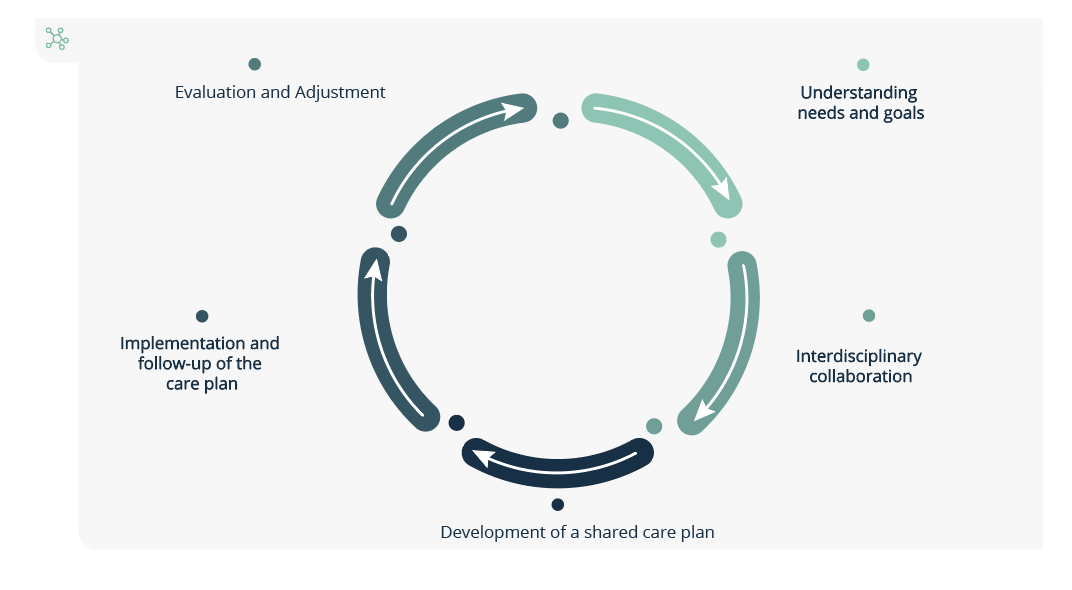
Below, we have provided an explanation of integrated care for an individual by referring to five simple steps. The description is based on the Interfederal Plan for Integrated Care, which emphasises that care and support providers should work together to care for an individual person by means of a single shared care plan and an integrated approach.
 |
Integrated care is always person-centred and goal-oriented. This means that, in integrated care, the person’s needs and goals are both central. Care and support are tailored to each person’s unique needs and goals. Person-centred care is based on the person as an individual: his or her needs, abilities, values and preferences. This approach is always based upon a bio-psychosocial perspective. This means looking beyond mere medical issues or diagnoses and paying attention to the psychological, social and contextual factors that influence the person’s functioning and well-being. This perspective acknowledges the relationship between health issues and social problems. Goal-oriented care complements this by explicitly focusing on what the person wants to achieve. Care and life goals are determined together with the individual (and, where relevant, with family members and healthcare and social service providers) and guide the healthcare and support provided. This is not only about medical goals, but also about goals relating to quality of life, participation, self-reliance and daily functioning. By making these goals explicit, care is tailored not only to what is necessary, but also to what is meaningful to the individual. Life goals provide direction for care goals. |

|
When needs are more complex, various healthcare and social service providers are involved. Together with the individual (and their support network), they form a single care team, working together and exchanging information to provide personalised, goal-oriented care. |
 |

 |
Whenever a high level of care is needed, or if the individual or caregiver requests it, a single shared care plan is drawn up. That plan describes:
The care plan provides everyone with clarity and guidance regarding the care and support to be provided. |

|
The care team implements the plan and follows up on it. The coordination of care is important in this regard: it ensures that care remains coherent and does not become fragmented. Care coordination can be carried out by:
If the needs are complex and the individual or caregiver is unable to manage them on their own, a care coordinator is assigned. This healthcare or social services provider maintains an overview and ensures that care is properly coordinated. In highly complex situations, a case manager may be called in. A case manager:
A case manager can also be called in if a care team has not yet been put in place (therefore acting in an initiating role). Both roles aim to ensure care and support that are coordinated and well organised.
|
 |



|
What does integrated care mean, specifically, for Nathalie and her family? Integrated care requires not only collaboration between healthcare and social service providers, but also collaboration with Nathalie’s family. Healthcare and support must be based on the family’s needs and goals. The midwife at the hospital screens Nathalie for psychosocial vulnerabilities using Born in Belgium Pro, a digital screening tool for healthcare and social service professionals. The following vulnerabilities then come to light: financial problems, housing problems and mental health issues. Nathalie feels that people are listening to her and that her mental and financial difficulties are being acknowledged. During a counselling session, the results of the screening are discussed and Nathalie and the counsellor explore how the difficulties can be addressed and by whom. The necessary care and support are provided based on the needs identified. As a result, Nathalie feels that the care and support are tailored to her needs and are therefore personalised and goal-oriented. During the consultation, the midwife suggests appointing a care coordinator. Nathalie agrees that a social worker at the hospital should take over the care coordination, since she does not feel ready to take on this responsibility herself. The care coordinator ensures that Nathalie receives appropriate, personalised care and support. As a result, Nathalie experiences continuity in her care. A care team is put together for Nathalie, based on her needs and screening results: Nathalie is referred to her municipality’s Public Centre for Social Welfare (PCSW) for a social/financial intake. She is also given the contact information of a primary care psychologist in her neighbourhood. The care coordinator monitors how care and support are being provided and adjusts them as needs change, for example, as the pregnancy progresses and during the postpartum period. A second consultation will take place during the third trimester of Nathalie’s pregnancy. That consultation will examine how care and support are progressing and how the difficulties identified earlier have evolved. During the consultation, the delivery and the postpartum period will be discussed and preparations made. Nathalie’s case shows that integrated care is not a stand-alone intervention, but rather an approach in which care and support are tailored to the needs of an individual and their family, with a focus on continuity, collaboration and self-direction.
|
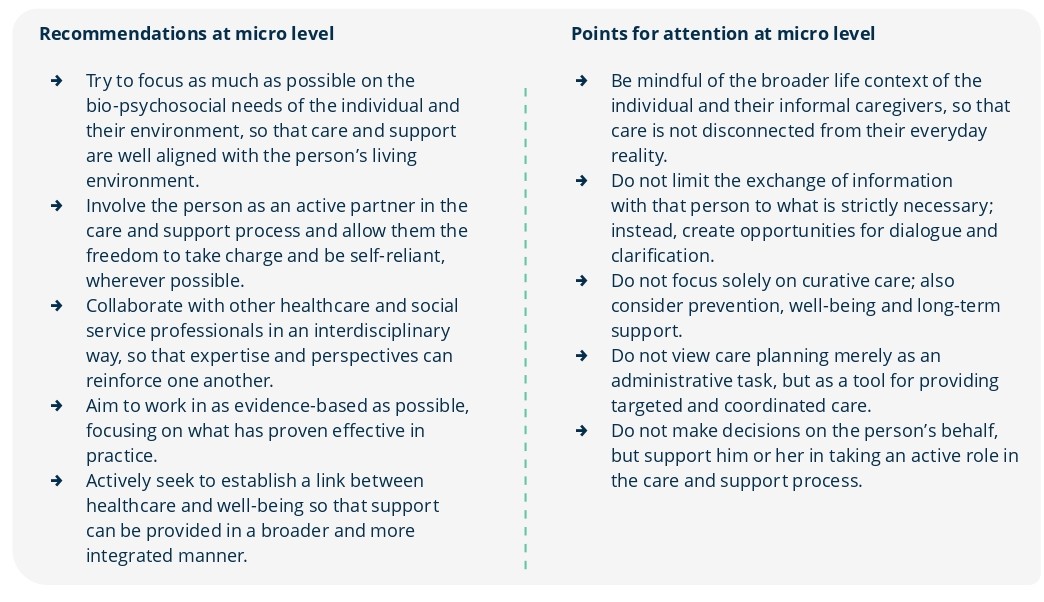
Finally, here are some tips for healthcare and social service professionals about how to provide integrated care:
2.2.3 Prerequisites for integrated care (foundation layer)
The Rainbow Model identifies the enablers for the successful implementation of integrated care.
Functional or strict enablers
This covers the practical and technical aspects of organising integrated care, such as:
- Interconnected ICT systems
- Co-financing
- Human Resources policy
- Planning and Coordination
In Belgium, there are three key considerations with regard to the strict enablers:
-
- There is no single, unified digital patient record.
- The financing of healthcare is still primarily performance-based.
- Healthcare and social service providers frequently still work separately, in silos or as independent practitioners.
These obstacles can be addressed in various ways, including by establishing care pathways and care programmes with tailored funding and care organisation that overcomes fragmentation, together with the necessary digital tools. Various initiatives are being implemented to address this issue.
Normative or soft enablers
This is about shared values and a common vision amongst healthcare and social service providers or organisations. This includes:
- Trust and openness
- A shared mission and goals
- An informal, collaborative culture
What helps is a meso level that facilitates networking and the development of a shared vision amongst stakeholders within a given region.
|
What are the key enablers in the case of Nathalie and her family?
|
[1] Lambert A-S, Op de Beeck S, Herbaux D, Macq J, Rappe P, Schmitz O, Schoonvaere Q, Van Innis A.L, Vandenbroeck P, De Groote J, Schoonaert L, Vercruysse H, Vlaemynck M, Bourgeois J, Lefèvre M, Van den Heede K, Benahmed N. Transitie naar (meer) geïntegreerde zorg in België – Synthese. Health Services Research (HSR). Brussel: Federaal Kenniscentrum voor de Gezondheidszorg (KCE). 2022. KCE Reports 359As. D/2022/10.273/50.
[2] Alami H, Lehoux P, Miller FA, Shaw SE, Fortin JP. An urgent call for the environmental sustainability of health systems: A ‘sextuple aim’ to care for patients, costs, providers, population equity and the planet. Int J Health Plann Manage. 2023 Mar;38(2):289-295. doi: 10.1002/hpm.3616. Epub 2023 Feb 3. PMID: 36734815.
[3] Determinants of health. Goinvo. 2020. Retrieved from https://www.goinvo.com/vision/determinants-of-health/
[5] https://www.departementzorg.be/nl/eerstelijnszones-en-zorgraden
[6] https://www.healthybelgium.be/en/key-data-in-healthcare/general-hospitals/organisation-en
[7] https://www.healthybelgium.be/en/key-data-in-healthcare/mental-healthcare/mental-healthcare-for-adults/networks-in-mental-healthcare-for-adults
[8] https://www.healthybelgium.be/en/key-data-in-healthcare/mental-healthcare/mental-healthcare-for-children-and-adolescents/networks-in-mental-healthcare-for-children-and-adolescents
[9] Onafhankelijke Ziekenfondsen (Independent Health Insurance Funds), 2025. De concentratie van de gezondheidsuitgaven in 2023 en de evolutie ervan sinds 2014. (The concentration of healthcare spending in 2023 and how it has changed since 2014) Retrieved from https://www.mloz.be/sites/default/files/ressources/20250401_Studie_De%20concentratie_van_de_gezondheidsuitgaven_in_2023_en_de_evolutie_ervan_sinds_2014.pdf